

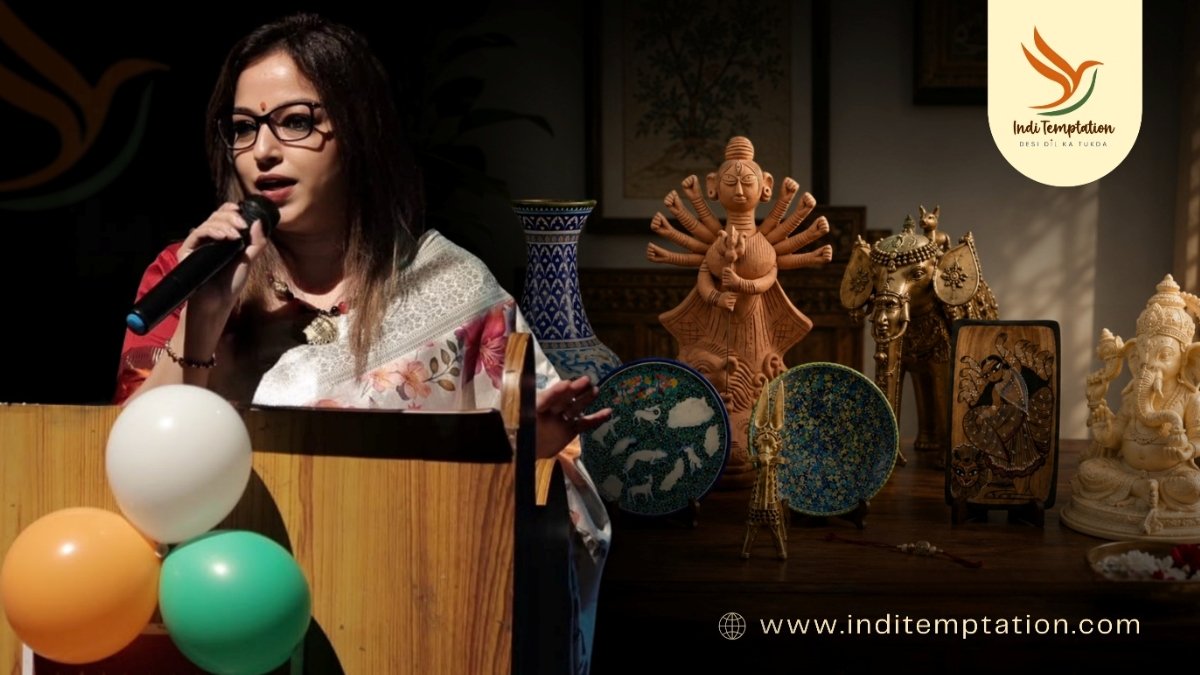
There are many ways to measure the progress of a nation. We often look at the factories that rise against the skyline, the technologies that cross borders, the businesses that create employment and the industries that contribute to economic growth. But there is another, quieter measure of a nation’s strength that is often overlooked. It can be found in the hands of the people who continue to create, often with little recognition, using skills passed down from one generation to another.
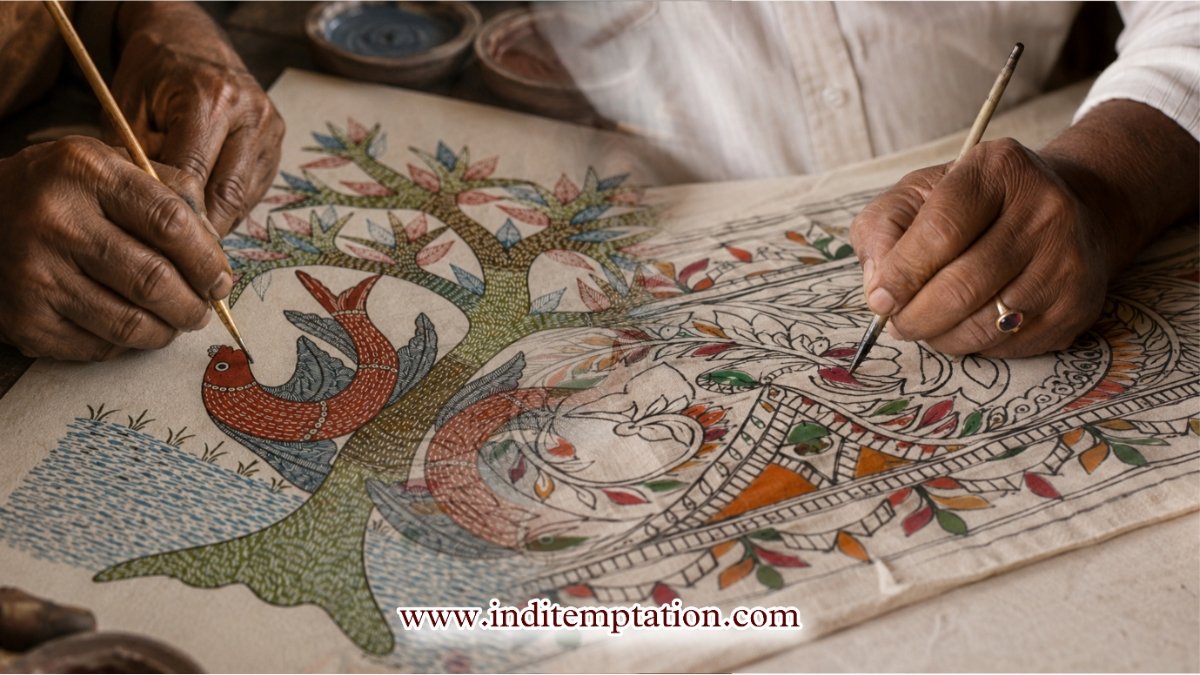
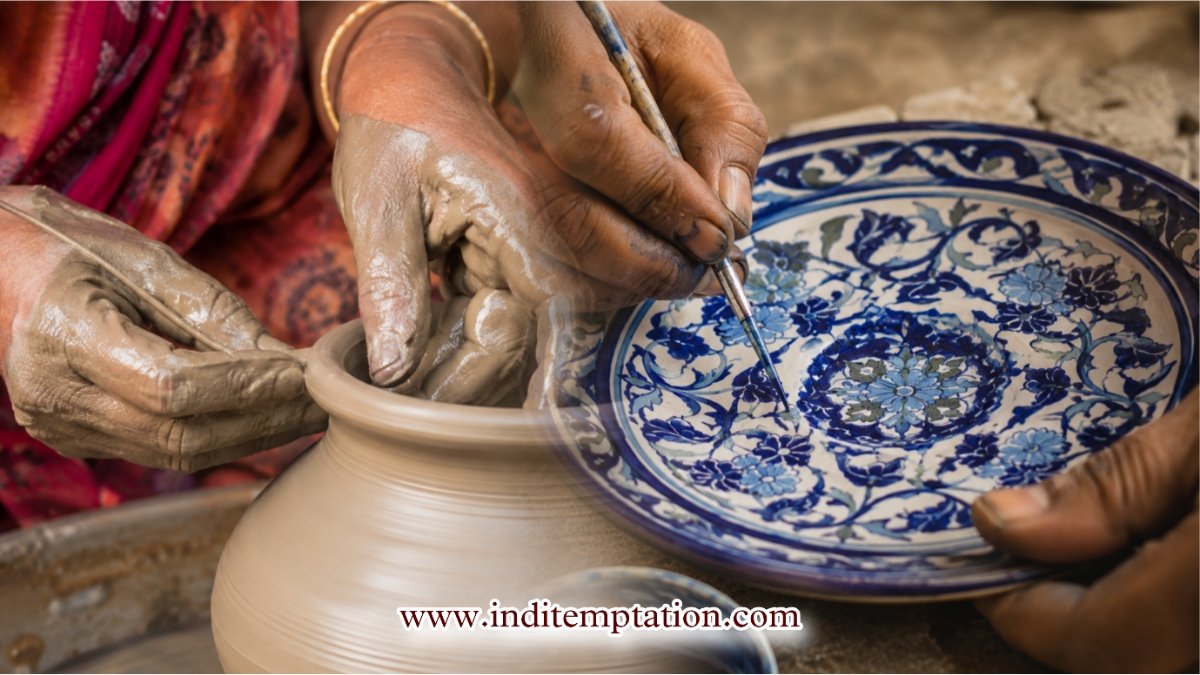
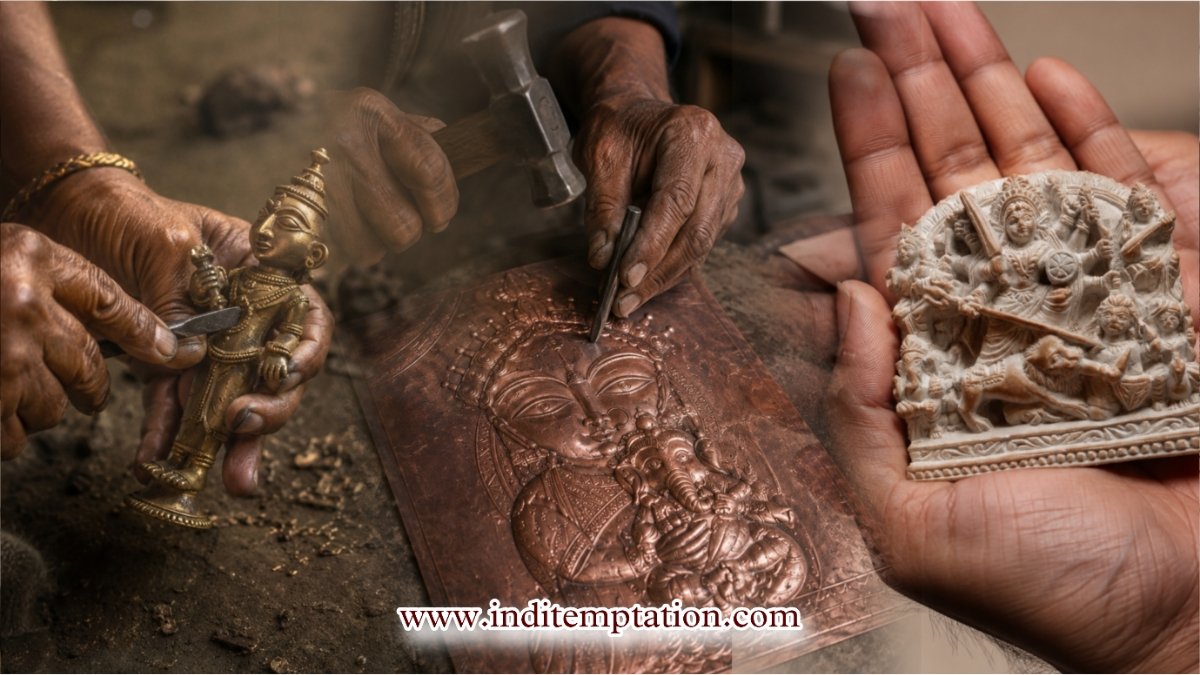
Think of the potter working with clay, patiently turning the wheel and giving shape to something as simple as earth. Think of the artisan working with terracotta, the craftsperson shaping Dokra or brass, or the artist carefully filling a canvas with the distinctive forms of Madhubani or Gond art. Behind each of these creations is not just a product, but years of knowledge, practice, and tradition.
This is also the living spirit of Atmanirbhar Bharat.
As India prepares to celebrate another Independence Day, it is important to remember that self-reliance is not only about large industries, technology or manufacturing. It also begins with the millions of skilled people who have the ability to turn their traditional knowledge and creativity into a livelihood. When an artisan is able to earn a sustainable income from their craft, reach new customers and find a market beyond their immediate surroundings, that too is a meaningful expression of self-reliance.
This is where IndiTemptation.com sees an opportunity to make a difference.
The platform is working to create a bridge between India’s artisan communities and consumers who appreciate authentic, handmade products. By bringing traditional Indian crafts into contemporary homes and lifestyles, IndiTemptation is helping these art forms reach audiences beyond the places where they originated. More importantly, it is helping bring attention to the people behind these creations.
The purpose goes beyond selling handicrafts. At its heart is the belief that when we support handmade products, we are also supporting the skill, time and livelihood of the person who created them.
A Vision Rooted in Heritage
For Parna Banerjee Bhaduri, Founder and CEO of IndiTemptation, the idea grew from a deep appreciation for the emotional value of handmade objects. In a world where so many things are mass-produced and increasingly similar, she wanted to create a space where craftsmanship could retain its individuality and where the story behind an object could be valued along with its beauty.
For her, artisans are not simply people who make products. They are custodians of traditions that have survived for generations. Their work carries memories of places, communities and cultures, and keeping those traditions alive also means creating an environment in which artisans can continue to earn from their skills.
“IndiTemptation was born from a desire to bring India’s timeless craftsmanship into spaces that seek beauty with depth. Every handcrafted piece carries the heartbeat, resilience and silent devotion of an artisan. When you bring an artifact into your home, you aren’t simply decorating a space—you are preserving a culture and contributing to an artisan’s journey toward self-reliance,” says Parna.
This, in many ways, reflects a broader understanding of Atmanirbhar Bharat. Self-reliance is not simply about making products within the country. It is also about strengthening the people who have the knowledge and ability to create those products.
From the Artisan’s Hands to the Global Home
India’s enormous cultural diversity is reflected in its crafts. Different regions have developed their own materials, techniques, colours, designs and methods of storytelling. A piece of art or craft often carries a strong connection to the place from which it comes.
IndiTemptation aims to take these traditions beyond their geographical boundaries and introduce them to contemporary consumers in India and across the world. The idea is not to change the identity of these crafts, but to give them a wider audience and a place in modern homes and lifestyles.
Traditional Indian art forms such as Gond, Madhubani and Tanjore painting are good examples. These works are not merely decorative. They often draw from mythology, nature, spirituality and everyday life, carrying stories and visual traditions that have evolved over generations. When such art finds a place in a contemporary home, it allows an old artistic language to continue speaking to a new generation.
The same is true of India’s rich traditions of pottery and terracotta. Clay has been an important part of Indian life and culture for centuries. From traditional pottery and terracotta to handcrafted planters and ceramic décor, artisans have demonstrated how simple natural materials can be transformed into objects of beauty and utility. Crafts such as Jaipur Blue Pottery further demonstrate the variety and sophistication of India’s craft traditions.
Metalcraft offers another fascinating example. The lost-wax technique used in Dokra, traditional brassware, and handcrafted metal jewellery are the result of knowledge and skills refined over generations. These traditions remind us that India’s heritage is not something that belongs only to the past. It continues to be created by artisans even today.
When these traditional crafts become part of contemporary décor, fashion, or everyday living, they are given an opportunity to remain relevant. Heritage, after all, survives not only when it is preserved, but when it continues to be used, appreciated, and passed on.
The Consumer Is Also Part of the Journey
The responsibility of building a self-reliant India does not rest with governments and businesses alone. Consumers, too, have an important role to play.
Every purchase reflects a choice. When we choose a handmade product over something mass-produced, we are making a small but meaningful contribution to the ecosystem that supports craftsmanship. We are recognising the value of skill, originality and the human effort behind an object.
For artisans, access to a wider market can make an important difference. It can provide opportunities to earn more sustainably and, perhaps most importantly, encourage younger generations to see traditional craftsmanship as a viable profession rather than something that must eventually disappear.
This is where platforms such as IndiTemptation can play an important role. By connecting artisans with consumers, they can help close the gap between the person who creates and the person who appreciates and purchases the creation.
Independence Beyond the Flag
August 15 reminds us of the freedom India achieved in 1947. But the meaning of independence has continued to evolve over the decades. Today, it also means creating opportunities, strengthening livelihoods and ensuring that India’s progress includes the communities whose skills and knowledge have contributed to its cultural identity.
For this reason, the conversation around Atmanirbhar Bharat can also be a conversation about India’s artisans.
The potter, painter, metalworker, weaver, sculptor, jeweller and countless other craftspeople are all part of India’s creative economy. Their work represents not only tradition, but also enterprise. With the right opportunities, their skills can provide livelihoods, support families, and give younger generations a reason to carry these traditions forward.
IndiTemptation’s contribution lies in trying to create that connection between heritage and opportunity. By bringing Indian craftsmanship closer to today’s consumers, the platform hopes to give artisans greater visibility while helping traditional art forms find a place in contemporary life.
This Independence Day, perhaps we should look beyond the familiar symbols of freedom and take a moment to notice the hands that continue to create India every day. The hands of an artisan may not make headlines, but they carry something incredibly valuable—the knowledge and creativity of generations.
A self-reliant India will certainly be built through industries, innovation, and technology. But it will also be strengthened by people who can create with their own hands, earn through their skills, and take pride in the heritage they carry forward.
Supporting those hands is therefore not simply about buying a beautiful object. It is about recognising the person behind it and giving their craft a chance to live on.
That is the spirit IndiTemptation hopes to celebrate this Independence Day: a connection between India’s heritage and its future, between artisans and consumers, and between traditional knowledge and new opportunities.
Because Atmanirbhar Bharat is ultimately about people—their skills, their creativity, their dignity, and their ability to build a future through what they know and love to create.
One artisan, one creation, one livelihood, and one story at a time.
IndiTemptation
Celebrating Indian Heritage. Empowering Artisan Enterprise. Advancing the Spirit of Atmanirbhar Bharat.
