

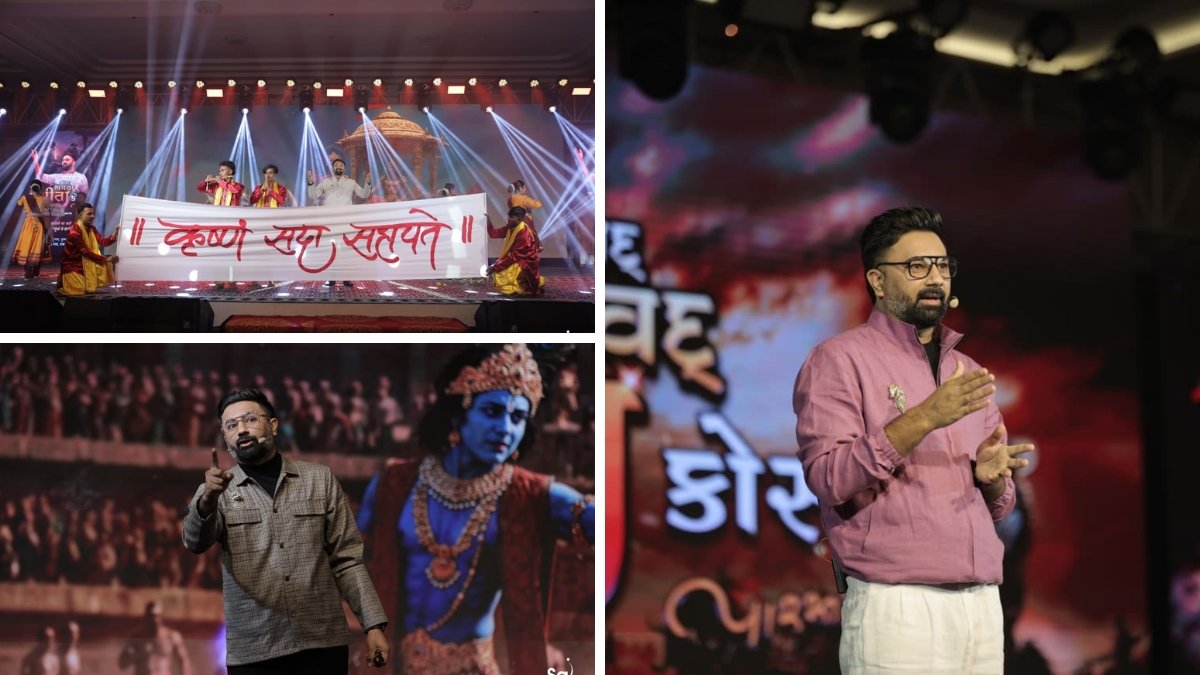
Surat (Gujarat) [India], April 13: Surat saw an unusually large turnout for a spiritual programme this week, but what stood out wasn’t just the numbers, it was the kind of conversations happening inside the venue.
From April 9 to 11, more than 4,000 people gathered at Sampada Festivity for a three-day Shrimad Bhagavad Gita course organised by Social Army Group. The audience wasn’t limited to any one group. There were students, working professionals, and families, many of them showing up with similar questions around stress, career pressure, and decision-making.
For a lot of attendees, the draw wasn’t religion as much as relevance.
Speaker Paras Pandhi kept his sessions grounded. Instead of going deep into scripture in a traditional sense, he focused on situations people deal with every day; failure, comparison, uncertainty about the future. His point, repeated in different ways, was simple: circumstances don’t always change quickly, but how you respond to them can.
That seemed to land with the younger crowd in particular. Some were seen taking notes, others just listening quietly. There was less of the usual distraction you’d expect in a gathering this size.
The format of the event also helped. Along with the talks, there were musical segments by Urvashi Radadiya and Rishabh Agrawat. Their performances broke the monotony and gave people space to absorb what they had heard.
A Krishna Leela presentation by Ami Patel’s team added a different dimension, especially for those who connect more with visual storytelling than spoken sessions.
At the venue, smaller elements were noticeable. Vedic chanting ran in the background for most of the programme. Rituals were conducted without much interruption. A small Gaushala setup also drew attention, with volunteers explaining its purpose to visitors.
Organisers said the idea was not to position the Gita as something abstract, but as something people can apply in day-to-day life, particularly at a time when many feel overwhelmed or unsure about their next steps.
The event also had lighter moments. A Lezim performance on the second day and Dhol-Tasha on the closing day brought some energy back into the crowd and kept the atmosphere from becoming too serious.
By the end of the three days, the response from participants was fairly consistent. Most didn’t describe it as life-changing in dramatic terms, but said it gave them a clearer way to think about situations they’re already dealing with.
In a city known more for business and pace, the turnout suggested there’s also space—and demand—for conversations like these.
