

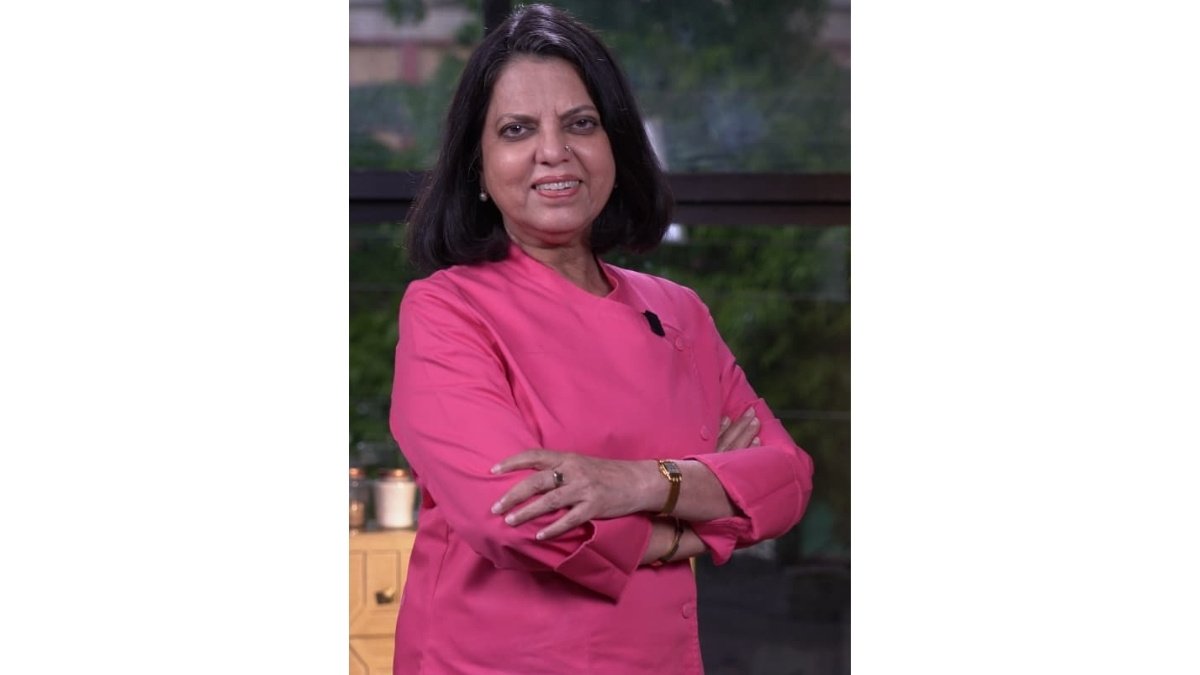
Chef Gunjan Goela
New Delhi [India], June 30: Food has always been much more than nourishment. It is memory, culture, history, identity and perhaps the most powerful way in which people connect with one another. For me, food has been a lifelong journey of discovery—one that spans nearly four decades and continues to unfold through research, storytelling and the preservation of our extraordinary culinary traditions.
Food entered my life long before it became my profession. One of my earliest and most cherished memories dates back to the age of nine, when India’s former President, Dr. Zakir Husain, visited my school. Knowing my love for cooking, my teacher entrusted me with the responsibility of preparing kheer for the President. I still remember serving it in a humble clay sakora—a simple gesture that remains one of my most treasured memories. At that age, I could never have imagined that decades later I would have the honour of serving Prime Minister Narendra Modi. Between those two moments lies a professional journey of nearly four decades, including a distinguished twenty-nine-year career with ITC Hotels.

My work has taken me across the country and to culinary showcases in Dubai, Spain, Italy, London and the United States, where I have had the privilege of presenting our vegetarian cuisine to international audiences. These experiences have strengthened my conviction that our food is not merely a collection of recipes—it is a philosophy of living in harmony with nature, respecting biodiversity and celebrating wellness.
Today, sustainability is one of the defining conversations of our time. Yet our traditional kitchens embraced its principles centuries ago through seasonal eating, mindful consumption, local ingredients and kitchens where almost nothing was wasted. Long before sustainability became a global movement, it was simply a way of life.
Our vegetarian culinary tradition remains one of the world’s finest examples of sustainable living. It celebrates nature’s bounty through grains, lentils, legumes, vegetables, fruits, herbs, spices, nuts and seeds, creating meals that are balanced, nourishing and deeply satisfying. Every ingredient has a purpose, every spice contributes not only flavour but also well-being, and every traditional recipe reflects generations of wisdom.
For me, sustainability is not about limitation but abundance. Nature provides everything required for good health if we respect its rhythms. When we eat seasonally, value indigenous ingredients, support local farmers and minimise waste, we nourish both ourselves and the environment. Good food should sustain people without exhausting the planet that sustains us.
One of our greatest strengths lies in the remarkable diversity of our food culture. Every few hundred kilometres, the landscape, climate, language and cuisine change. Each region has evolved according to its geography, crops and customs. Every dish tells the story of a people, their resilience and their celebrations. To understand our food traditions is, in many ways, to understand our civilisation.
This belief inspired one of the most meaningful chapters of my career—an extensive research project on the food traditions of Old Delhi’s Bania community. Years of fieldwork, conversations with families and archival research culminated in my book, Baniya Legacy of Old Delhi: Culture and Cuisine, documenting one of the country’s richest yet least explored vegetarian culinary traditions. More than a collection of recipes, the book preserves a community’s philosophy, festivals, customs and food wisdom, reaffirming my belief that recipes are living archives of culture and identity.
Beyond the kitchen, I have been fortunate to learn from farmers, home cooks, artisans, scholars, entrepreneurs, industrialists, public leaders and fellow chefs. These experiences have strengthened my belief that food remains humanity’s greatest cultural connector, bringing people together across generations, geographies and traditions.
As a trained international culinary judge and a member of the World Association of Chefs’ Societies (Worldchefs), I remain actively engaged with the global culinary fraternity through judging, professional forums and educational initiatives. These experiences continually reaffirm that while techniques evolve, authenticity, integrity and respect for ingredients remain timeless.
As a chef, culinary historian, author and international culinary judge, I believe my responsibility extends beyond preserving recipes. It is about preserving the values they represent—respect for nature, gratitude to our farmers, mindful consumption and the understanding that food is one of humanity’s greatest cultural inheritances.
The future of gastronomy will be shaped not by extravagance but by responsibility. Our vegetarian traditions offer a remarkable blueprint because they have quietly championed sustainability, balance and respect for nature for centuries. My mission remains simple: to tell our story through food. Whether through research, writing, international presentations, heritage dining experiences, judging culinary excellence or mentoring young professionals, I hope to inspire a deeper appreciation of the wisdom that resides in our kitchens.
When we preserve our culinary traditions, we preserve our identity. When we celebrate this timeless vegetarian wisdom, we celebrate one of the world’s greatest living food cultures. And when we choose food that respects nature, we leave behind not merely recipes, but a legacy of health, sustainability and hope for generations to come.
If you object to the content of this press release, please notify us at pr.error.rectification@gmail.com. We will respond and rectify the situation within 24 hours.
